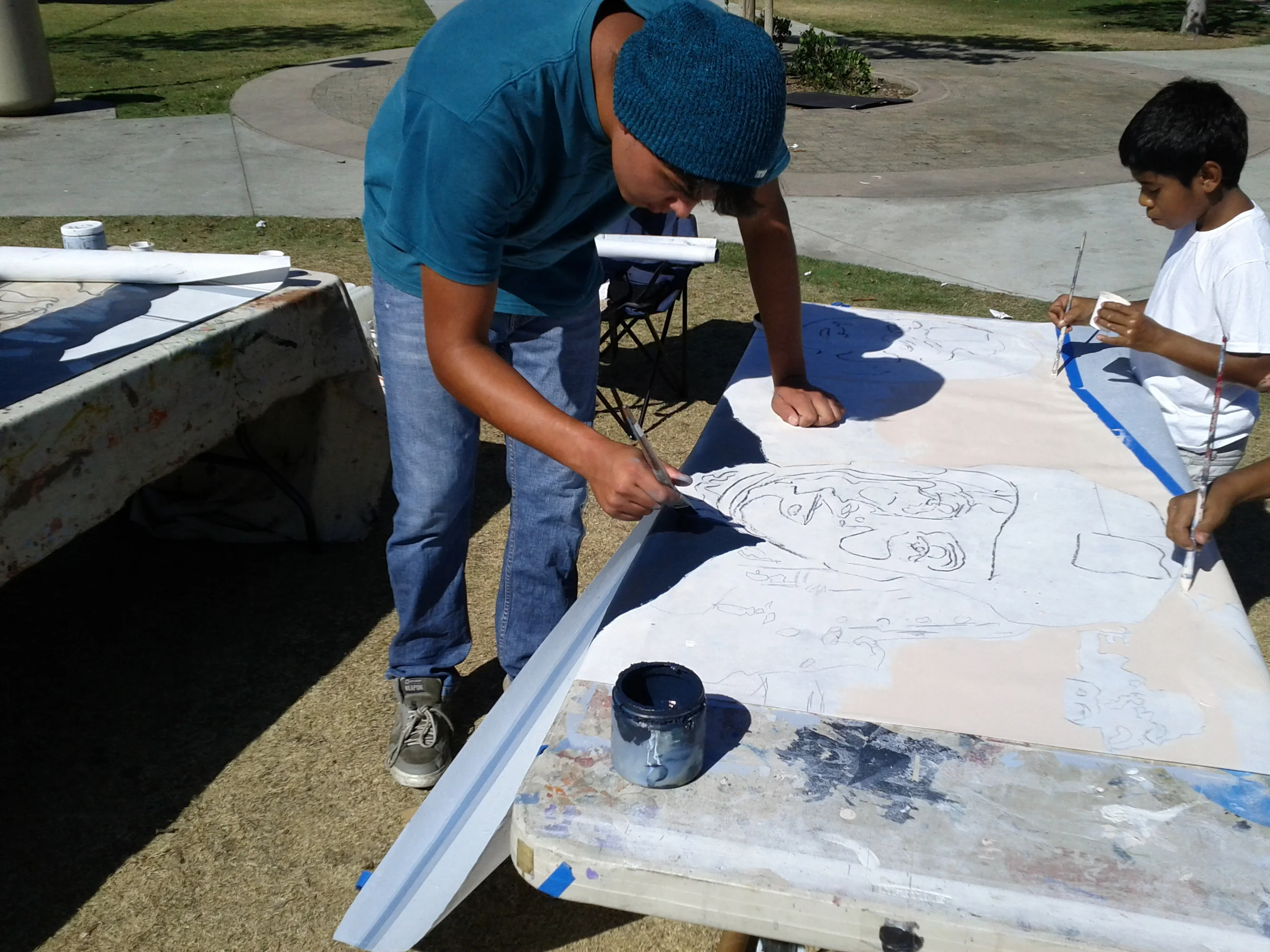
MURAL FABRIC- PolyTab
I was first introduced to the use of polytab mural fabric (also referred to as parachute cloth at the time) at a mural conference in Mexico City during a presentation by Jane Golden, director of the Philadelphia mural program. I reached out to artist Deliah King, Philadelphia artist, who helped me track down the distributor of the material.
I have been using and experimenting with this material for the past 12 years. The material has a wonderful variety of applications because it can be adhered to all types of surfaces. Particularly the ability to work off site in studio and minimize time at a site, cutting down cost of equipment rental, and issues with access.
MATERIAL
Polytab is a non-woven interfacing used in textile manufacturing. If you have looked under a couch you might recognize the material. It comes in different weights and sizes. The material is very light, lighter than canvas, and can take on the form of the substrate it is being applied to. This fabric that is traditionally used in the garment industry is now widely part of large public mural art projects.
It is locally distributed by STC-QST out of Los Angeles.
Product name is Polytab20 Style # 320 and is available in 46” width or 60” width. Each roll contains 250 yards. Inquire with the vendor about pricing.
Application
I have installed this material on stucco, brick, cinder block, concrete retaining walls, wood paneling, aluminum composite boards (dibond), and interior painted drywall.
I mix a 60/40 mixture of acrylic medium (novaplex) and gesso and roll it on the fabric. Do this over a flat, even surface. I layout plastic sheeting before priming to prevent the material from sticking to the underlying surface.
Once the fabric is dry it will be ready to paint. Be careful not to fold as it does have a tendency to crease.
I use Artex Nova Color Paints (Culver City) for all aspects of the mural painting process.
Installation
The surface the fabric will be applied to should be prepared as a normal mural wall would be prepared.
With the wall prepped and gessoed, use Nova Gel to adhere the fabric to the wall.
Apply it generously to the wall and the back of the fabric with a heavy nap roller.
Use a squeegee that will not damage the painted surface to smooth out any bubbles and smooth out the fabric against the wall.
I normally apply a coat of gel over the edge seam and the wall to create a seamless edge.
Final paint touch ups can be done at this time to blend the seams.
Apply a varnish coating.
This is a general overview of the process. There are several methods out there on the process but I advise you to experiment with the materials on your own.
No images or content from this site may be used without the written permission of the site's owner.
If you are interested in more information or specifics as they pertain to individual application installation you can contact me for consultation at: lozaprojects@gmail.com